From late October to mid-November 2025, Professor Jørgen Bruhn, Director of the Centre for Intermedial and Multimodal Studies at Linnaeus University, Sweden, visited Nanjing University at the invitation of the Institute of Global Humanities. During his stay, he delivered five lectures and took part in one thematic academic workshop on the Suzhou and Xianlin campuses. This series was hosted by the Institute for Global Humanities, Nanjing University, and co-organized by the School of Frontier Science, the School of Foreign Studies, the Center for Comparative Literature and Intercultural Studies, the Office of International Affairs, and the Nanjing University International Visiting Scholar Initiative (NIFI).
These activities systematically showcased his cutting-edge work in intermedial ecocriticism, environmental “grotesque” aesthetics, intermedial subjectivity, and artificial intelligence and synthetic transmediation. The series attracted enthusiastic participation from students and faculty within and beyond Nanjing University, spanning the fields of literature, art, film and media, environmental humanities, and digital media. The discussions were lively and in-depth, and the overall academic atmosphere was highly engaging.
Academic Events Overview
October 30 (Thursday), Suzhou Campus, Nanyong Building East 218
“Communicating Truthfulness in Ecological Media: Theories and Methods of Intermedial Ecocriticism”
This lecture was chaired by Professor He Chengzhou from the Institute of Global Humanities. Starting from the core concept of "truthfulness", Professor Bruhn explained how intermedial comparison can be used to analyse the "media affordances" and "mechanisms of subject formation" at work when scientific texts, images, literature, and mass media represent the climate crisis.
In the Q&A session, students raised a wide range of questions. Discussion focused on topics such as the ethical boundaries of different media in constructing ecological truthfulness, and the tensions between scientific communication and artistic expression in climate-related issues, leading to a rich and inspiring exchange.
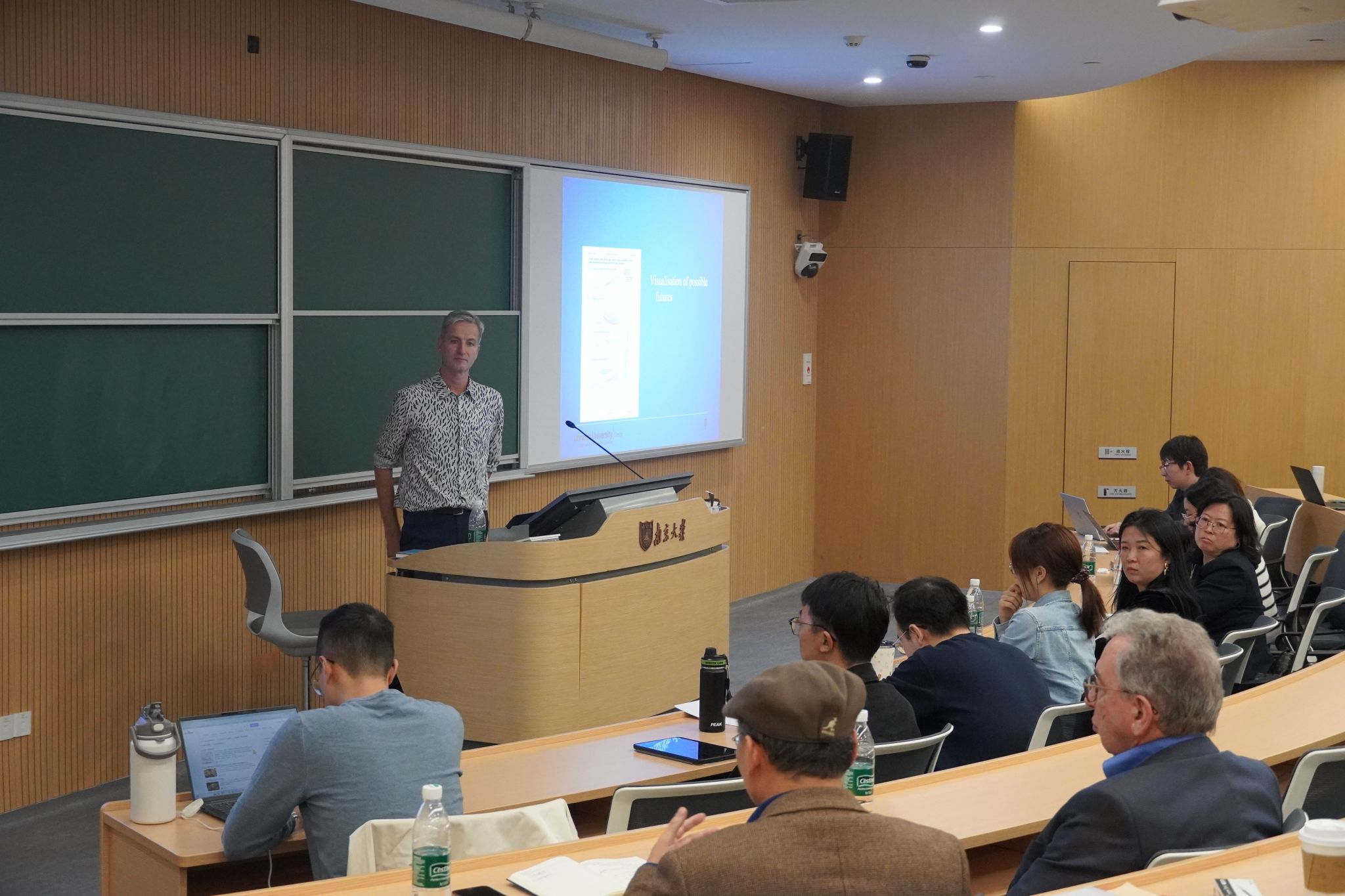
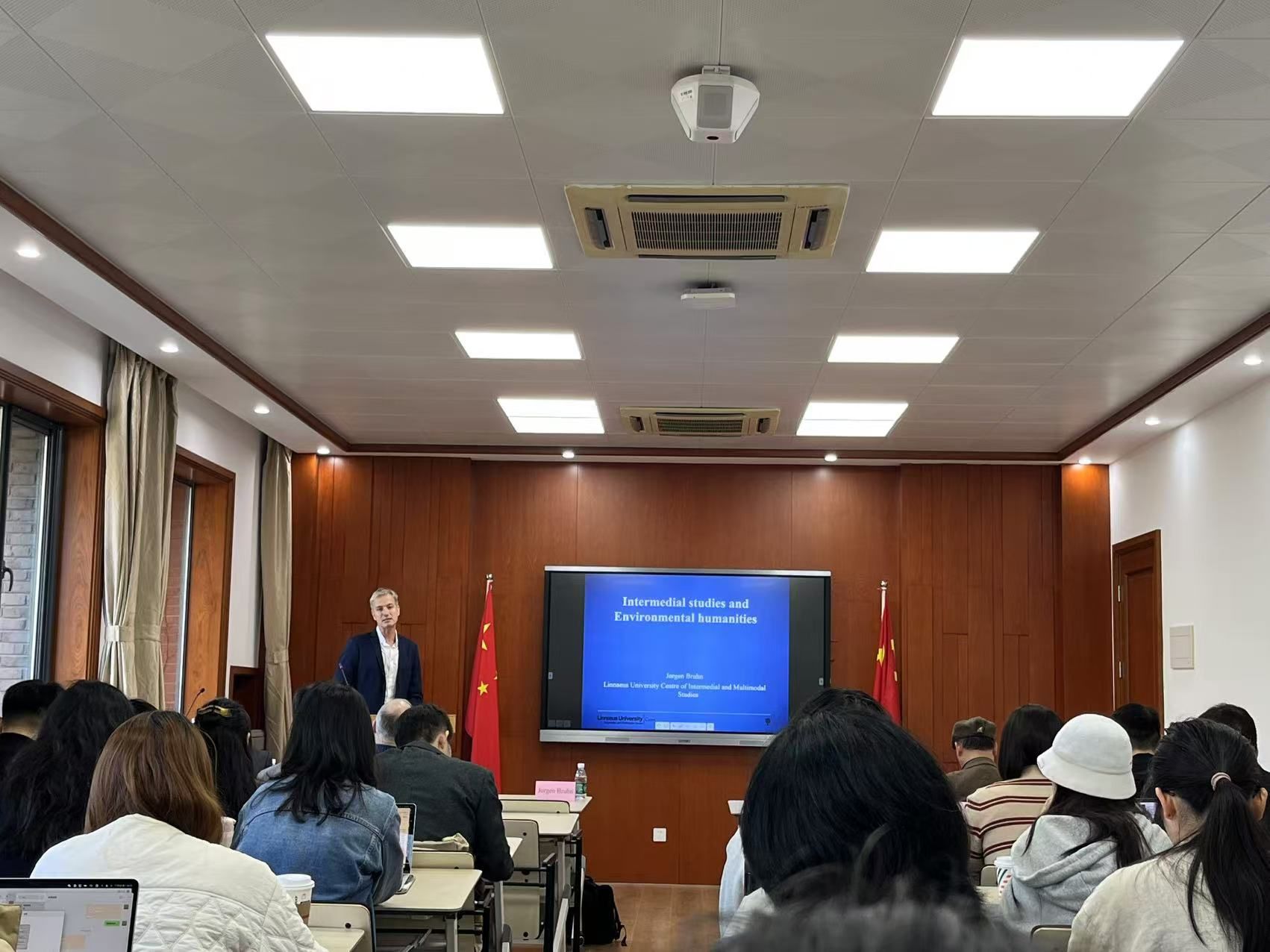
November 3 (Monday), Xianlin Campus, Qiaoyu Building 303
Thematic Workshop: “Intermedial Studies in Literature and the Arts”
The workshop opened with welcome remarks by Professor Chen Bing from the School of Foreign Studies. The two sessions were chaired by Prof. Chen Chang and Dr. Wu Yikun respectively.
Professor Bruhn delivered the keynote lecture, "Intermediality and the Environmental Humanities", followed by an in-depth dialogue with Professor Theo D'haen (KU Leuven, Belgium). Several scholars from Nanjing University and other institutions—including Professor Sandro Jung (Fudan University) and Professor Ou Rong (Hangzhou Normal University)—gave talks on topics such as intermedial narration, visual culture, and urban aesthetics. Graduate students actively participated in the discussion, especially on questions such as how intermedial approaches can be integrated into the analysis of local cultures, creating a dynamic and intellectually stimulating atmosphere.
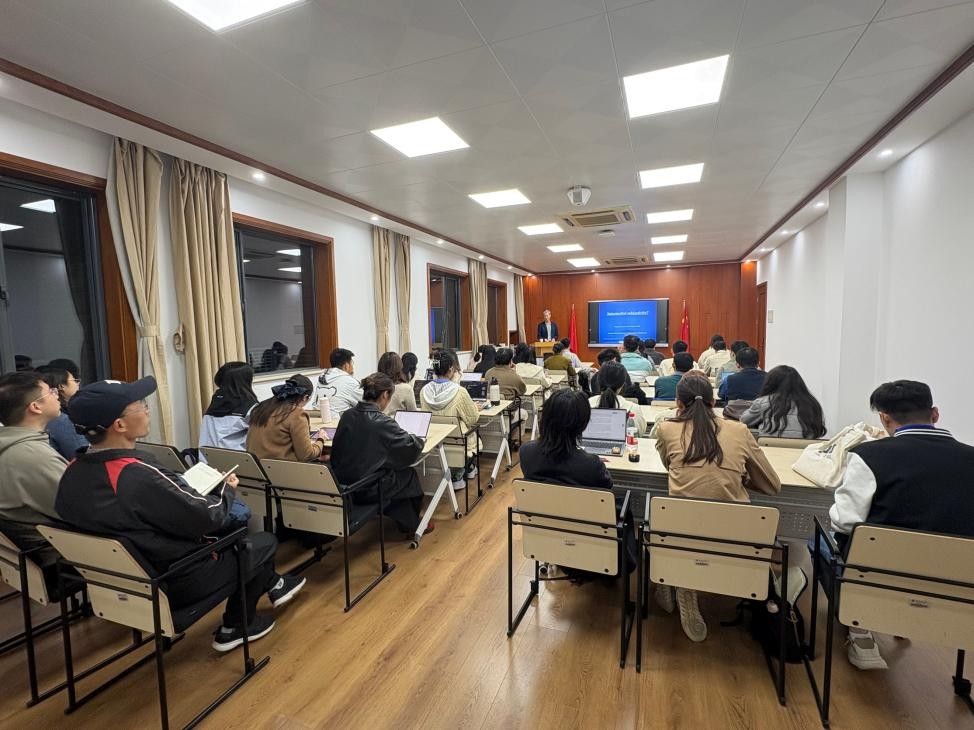
November 4 (Tuesday), Xianlin Campus, Qiaoyu Building 303
"Environmental Grotesque Media: Possibilities and Problems"
This lecture was chaired by Dr. Wu Yikun, Assistant Research Fellow at the School of Foreign Studies.
Professor Bruhn proposed "environmental grotesque" as a new conceptual framework for understanding contemporary ecological art and media expressions. Drawing on examples from literature, film and television, and contemporary art, he demonstrated how strategies of exaggeration, paradox, and playfulness can disrupt the public’s "climate indifference."
During the discussion, students closely engaged with questions such as whether grotesque aesthetics can be adapted to non-Western contexts, how it might balance between provoking action and causing discomfort, and how intermedial methods can be applied across the humanities. The debate was intense and thought-provoking.

November 10 (Monday), Xianlin Campus, Qiaoyu Building 303
"Intermedial Subjectivity: Rethinking the Human in a Mediated World"
This session was chaired by Associate Professor Chen Chang from the School of Foreign Studies.
Interweaving philosophy of technology with intermedial theory, Professor Bruhn explored how digital media, probabilistic interfaces, and artificial intelligence are reshaping human subjectivity, perception, and agency. In the Q&A session, students engaged him in sustained conversation on topics such as the erosion of traditional notions of authorship by AI-generated content and the embodied experience of living in increasingly mediated environments.
November 15 (Saturday), Suzhou Campus, Nanyong Building West 110 Lecture Hall
2025 Annual Conference of the Committee for World Literature and Literary Theory, China Comparative Literature Association –
"Intermediality Studies and Reconstruction of World Literature Canon"
At this academic conference, Professor Bruhn delivered a keynote lecture titled "Intermediality and World Literature: Rita Indiana’s Environmental Grotesque Narratives." Focusing on the work of Dominican writer Rita Indiana, he showed how the aesthetics of environmental grotesque, via intermedial narration, can intervene in global discussions on ecological issues and expand the critical scope of world literature studies. At the end of his lecture, Professor He Chengzhou, serving as discussant, formally presented Professor Bruhn with the title of "Nanjing University International Visiting Scholar (NIFI)", in recognition of his outstanding contributions to intermedial studies and the significant academic impact of his visit.


November 18 (Tuesday), Suzhou Campus, Nanyong Building East 428
"Synthetic Transmediation: Preliminary Reflections on Artificial Intelligence and Intermediality"
This lecture was chaired by Dr. Zhang Tianyi, Assistant Research Fellow at the Institute of Global Humanities.
Using AI-generated works by Singaporean artist Niceaunties as a case study, Professor Bruhn proposed a shift from human-centered "transmediation" towards posthuman/synthetic transmediation, offering a new analytical framework. Students showed strong interest in questions such as AI’s agency in intermedial creation and whether AI-based artistic production is meaningful, and the questions kept coming. At the close of the session, Dr. Zhang expressed heartfelt thanks to Professor Bruhn on behalf of the Institute of Global Humanities and its director, Professor He Chengzhou.
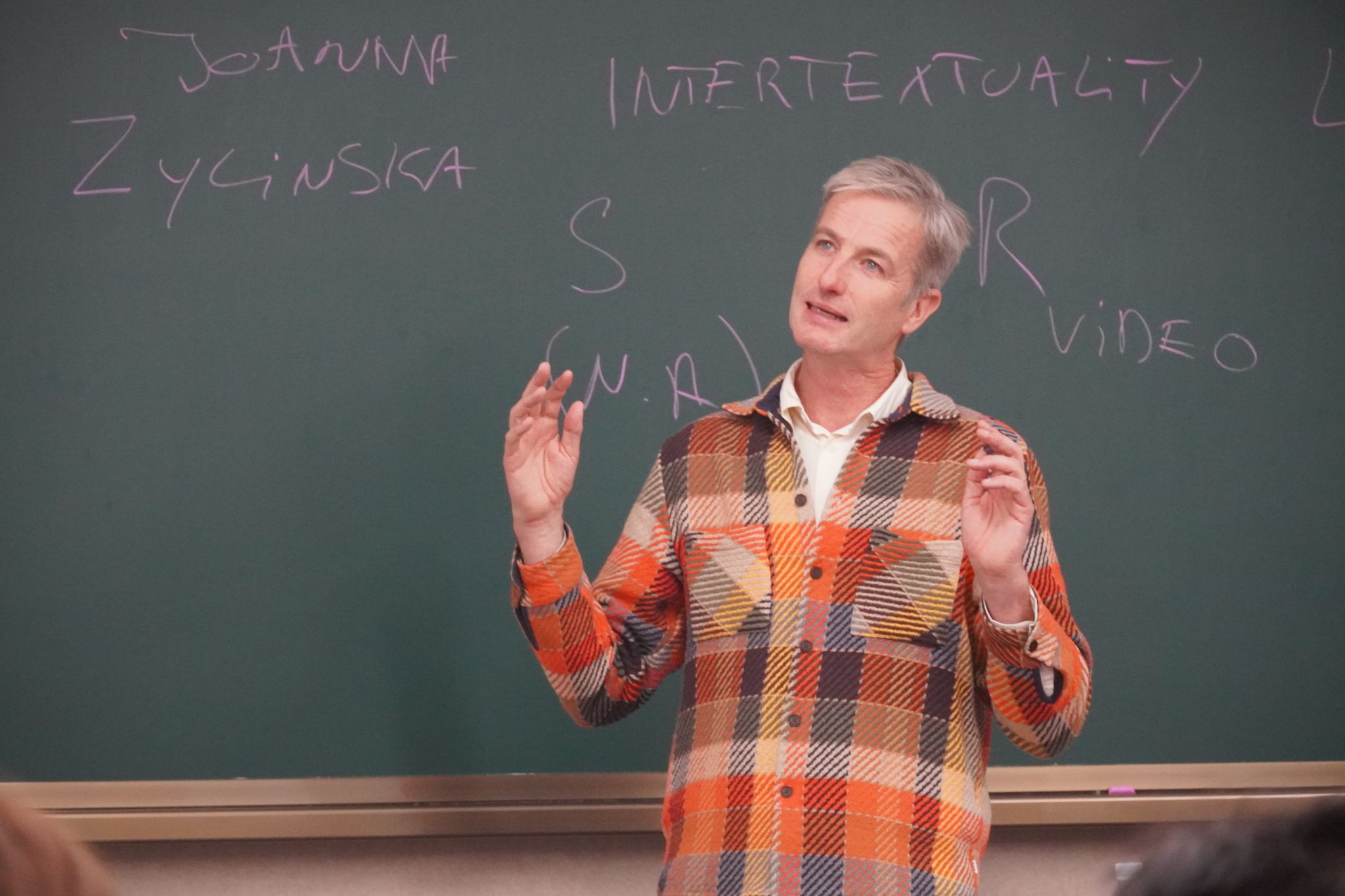
Beyond the formal lectures and workshop, Professor Bruhn also engaged in multiple informal academic exchanges with Nanjing University master's and doctoral students. Students discussed topics such as research methodology, theoretical reading, and academic writing with Professor Bruhn. Many participants reported that these conversations not only broadened their horizons in intermedial studies but also provided concrete inspiration for their own project design and thesis writing.

The lecture series by Professor Bruhn offered a multidimensional view of Linnaeus University's leading research in intermediality—especially in the area of "intermedial ecocriticism." Methodologically, his work is characterized by three main features: integrating intermedial comparison with ecocriticism, directly engaging with the crises of knowledge production and representation in the context of the Anthropocene; introducing innovative concepts such as "truthfulness" and "environmental grotesque" to reassess the potential and limits of media in climate communication and cultural imagination; rethinking intermedial theory from the angles of subjectivity, AI-driven synthetic production, and philosophy of technology, thereby opening up new ethical and theoretical questions. This series of events has advanced NJU's international dialogue in global humanities and interdisciplinary methodologies, while also laying a solid foundation for future curriculum development and collaborative projects.