On November 21, as winter approached, the Psychological Center of Nanjing University organized a hands-on therapeutic workshop for both students of all nationalities. The event received an enthusiastic response upon announcement, with all thirty spots quickly filled. At the scene, the center prepared colorful fallen leaves and silk threads for the participants, bringing warmth and vibrancy to the deep autumn of Nanjing. Amid the intertwining of red threads and the veins of autumn leaves, the seeds of cross-cultural communication quietly took root and began to grow.

The workshop began promptly at 4 pm with an ice-breaking session featuring “pass the flower with drumbeats”. Students passed or even threw the stuffed bear with the music and the person holding the bear when the music stopped was invited to make a brief self-introduction. By answering certain questions, students from China, Mongolia , Malaysia and England shared with us their favourite songs, happiness from recent events and expectations for the future. In bursts of mirth and genuine exchange, the distance between students from different countries quickly melted away, and a warm, lively atmosphere enveloped the activity.

In the second part ,organizers of the activity used vivid illustrations and videos to introduce the cultural background of fallen-leaf bookmarks. For Chinese people, picking up fallen leaves and turning them into bookmarks symbolize the continuation of life in another from.This handmade practice reflects the idea of ‘cherishing objects and revering the nature’, which is a traditional Chinese life philosophy. As for the Chinese knot, the host described its evolution from a practical tool for recording history into a cultural symbol embodying good fortune and blessings. “I have seen images of Chinese knots on the Internet quite often”, said Emmanuel from France, “But it’s the first time for me to know there are even different meanings behind various patterns of knots.”

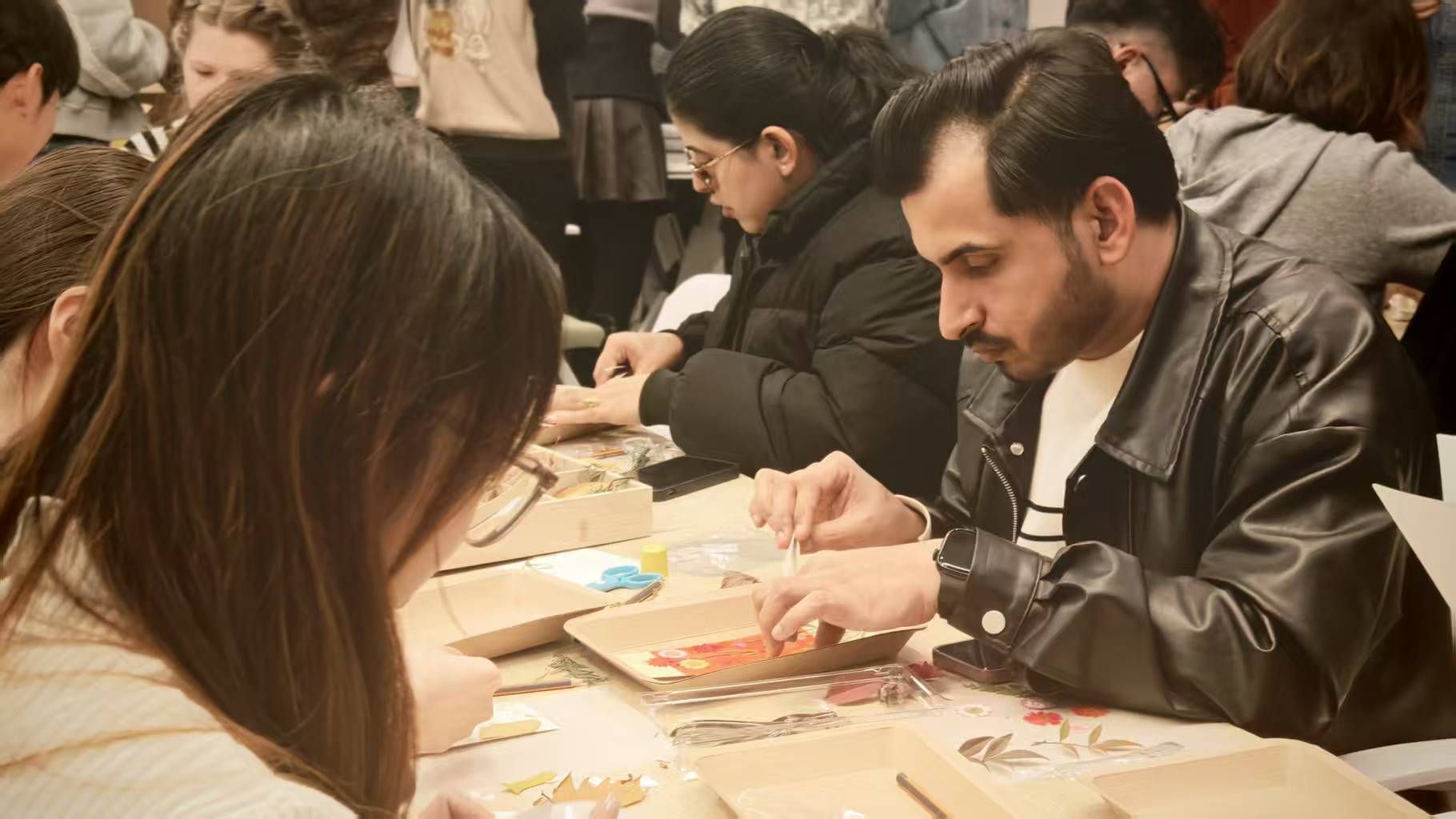
Then came the hands-on session of making fallen leaf bookmarks. Each group received a box containing an assortment of ginkgo leaves, maple leaves, pine needles, and other fallen leaves of various sizes and colors for their free option. The participants started by sketching their desired design on a bookmark with a pencil, then selected suitable leaves, trimmed them with scissors, and used tweezers and glue to carefully attach them to the bookmark. Once completed, participants queued up in front of the laminator to have their leaf bookmarks sealed. Though simple in process, this creative session provided ample space for inspiration and expression. Creative and ingenious works made by students frequently drew crowds and exclamations of admiration around the laminator.

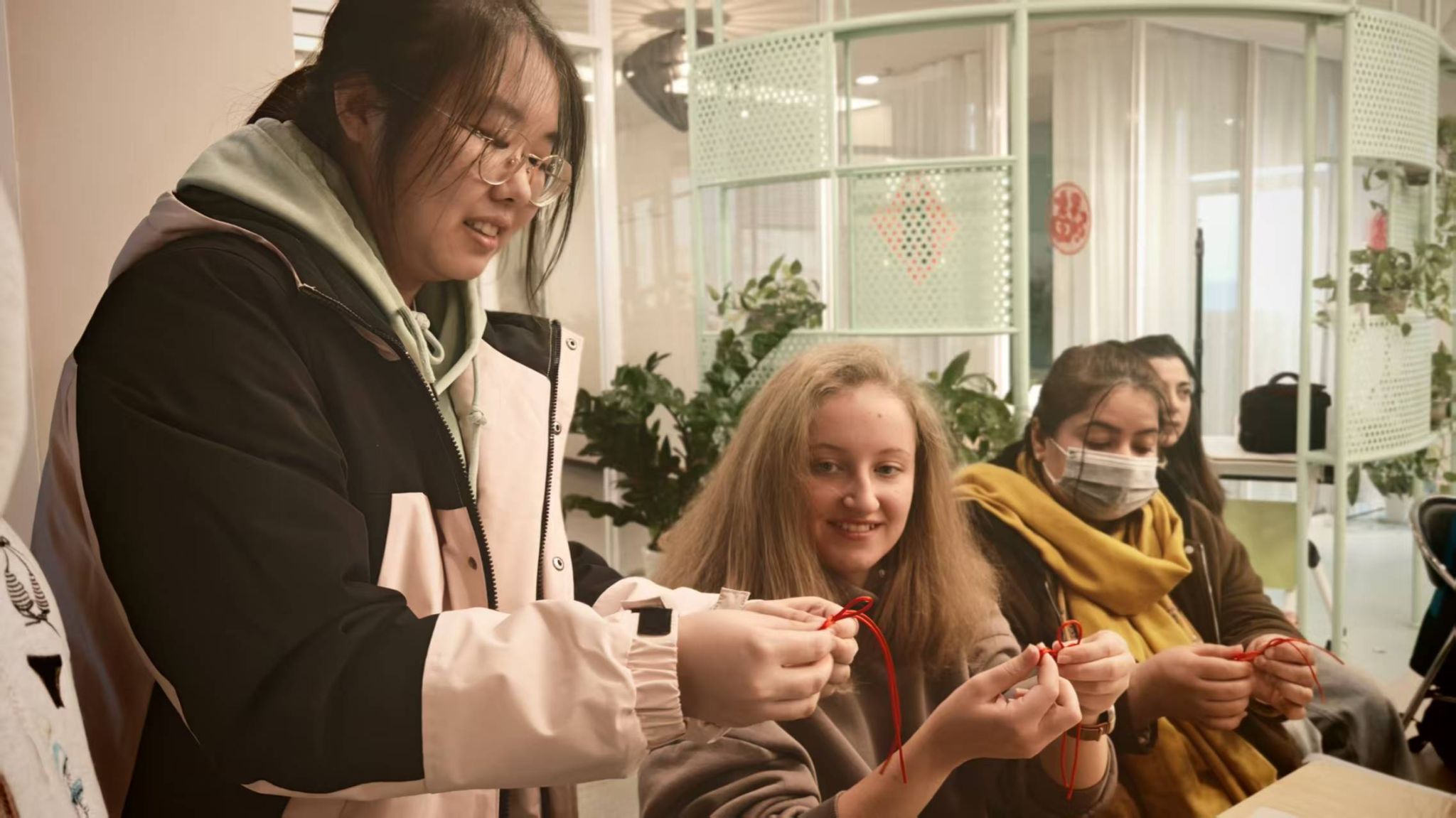
While making fallen leaf bookmarks is quite simple, most participants found making Chinese knots far more challenging. The organizers provided participants with two choices of Chinese knot models: one more challenging and the other relatively simple. But for both options, the red cord had to be intricately interlaced and folded to form symbolic shapes, all while ensuring the structure stayed firmly in place without coming loose. Many students encountered difficulties during the process. Volunteers patiently stepped in to help, using images, videos, and live demonstrations to repeatedly walk participants through the steps and troubleshoot issues together. Those who finished first in each group took the initiative to explain and demonstrate to others, while those still struggling kept on asking questions and listened with focused attention. Amid this warm and sincere mutual support, participants transcended language and nationality barriers, sparking lively and deepened communication.

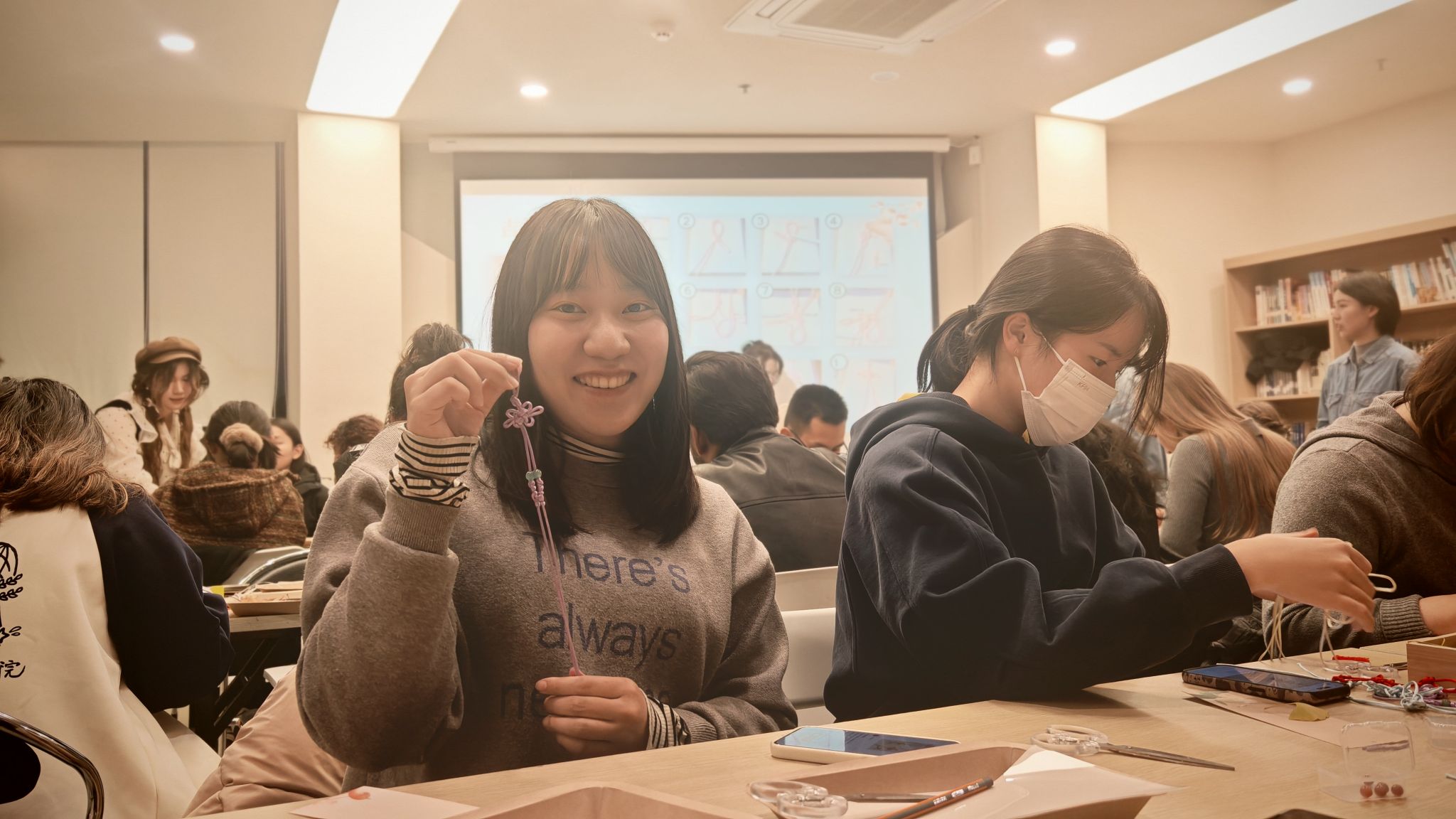
After the activity, participants showed their work to each other and shared their feelings. "During the crafting process, I felt extremely focused and relaxed, as if I had entered a state of flow. I truly enjoyed the pleasure of creation, with no other distractions in my mind," said a Chinese participant. Others also noted that the event offered them a hands-on opportunity to unleash their creativity,which is quite rare considering their demanding academic and research schedules. They acknowledged that the workshop was highly effective in alleviating stress and truly served its intended "therapeutic" purpose.
Bailu(Lou) from France saw those two hands-on activities as a unique expression of Chinese culture, noting, "Back in France, we tend to express emotions in different ways." At the same time, a Russian international student mentioned that in her culture, people also have traditions of creating handicrafts from leaves, flowers, and paper to extend best wishes to family members. She shared that the event offered her a valuable opportunity to make friends from various countries and engage in cultural exchange, adding, "I’ll definitely invite my friends to join the next event together."


The event successfully blended therapeutic, cultural, and artistic experiences.On this chilly late autumn afternoon, it allowed students to find both inner peace and the passion of connection.
Writer: Wang Siyue
Editor: Guo Junlin